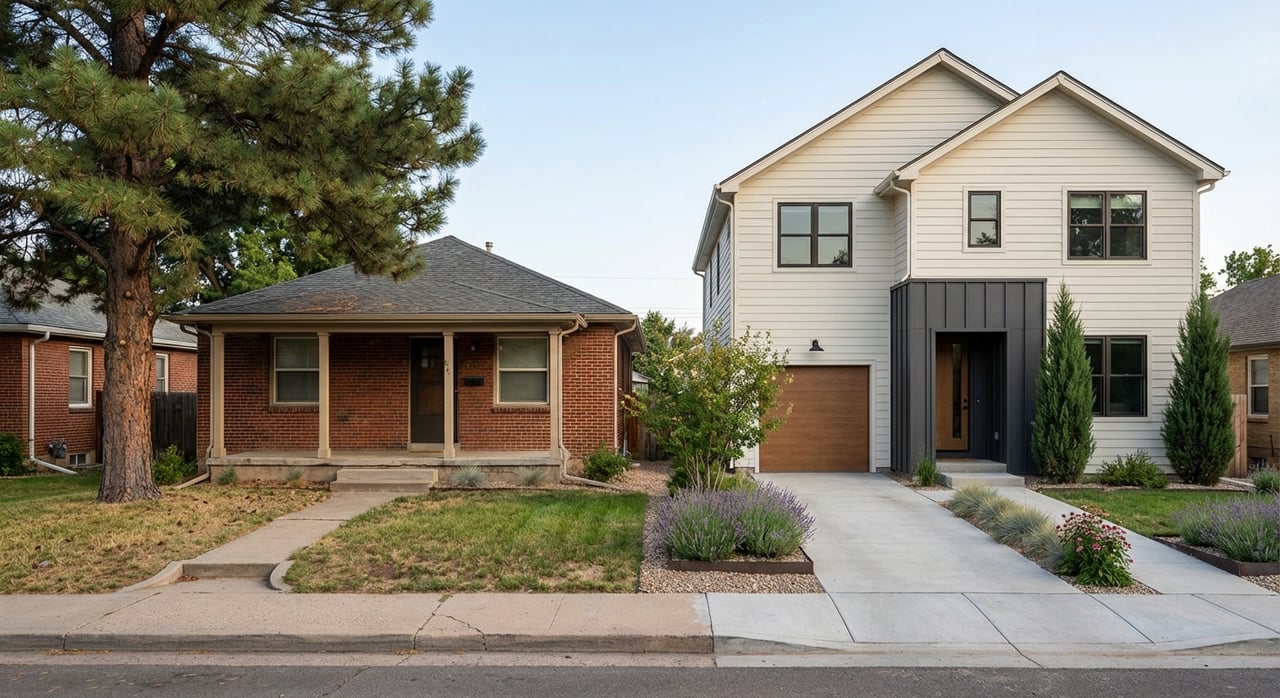
Do you picture yourself on a tree-lined block with a front porch and original woodwork, or in a sleek, energy-smart home that is ready on day one? Choosing between historic charm and a new build in Denver is a real tradeoff, and it helps to know what that means here. You want a place that fits your lifestyle, your budget, and your long-term plans. In this guide, you’ll learn how Denver’s home styles differ, what to expect with inspections and permits, and how to plan your offer with confidence. Let’s dive in.
Denver home styles at a glance
What “historic” means in Denver
When buyers say “historic” in Denver, they usually mean homes built from the late 1800s through the 1930s. Common styles include Victorian and Queen Anne from the late 1800s to early 1900s with decorative trim and tall windows, Craftsman and Bungalow homes from the 1910s to 1930s with exposed rafters and built-ins, and the Denver Square or American Foursquare from about 1900 to 1930 with a simple, boxy two-story plan. Period revival styles like Tudor and Colonial Revival also appear across early 20th-century streetcar neighborhoods.
These eras can hint at the systems you might find. Older wiring, older plumbing materials, single-pane windows, and older foundations are common in houses built before mid-century. That does not make them bad homes. It does mean you should plan your inspection and ownership budgets with age in mind.
Where you find historic versus new
Denver’s locally designated historic districts include areas like Capitol Hill, Cheesman Park, Baker, and parts of Lower Downtown, Five Points, and Country Club or Cherry Creek. These central neighborhoods typically offer walkability, transit access, and established streetscapes with older building stock. If a property sits within a local historic district or is a designated landmark, exterior changes may require design review by the city.
New construction shows up in two main ways. You will see suburban subdivisions and master-planned communities on the metro fringe. Inside the city, you will find infill townhomes and single-family homes on smaller lots where older houses have been replaced. New builds must meet current building and energy codes, which improve efficiency and safety. You can review Denver’s current code adoption and green requirements on the city’s page for Building Codes, Policies, and Guides.
Pros and cons by lifestyle
Choose historic if you prioritize
- Original character like millwork, built-ins, and front porches.
- Central neighborhoods with mature trees and walkable blocks.
- Larger lots in some areas and distinctive architecture.
- Willingness to handle higher short-term maintenance or phased upgrades.
- Working within possible design-review rules for exterior changes in designated districts.
Choose new construction if you want
- Move-in readiness with modern systems and finishes.
- Energy efficiency that aligns with current codes and green checklists.
- Lower immediate maintenance and often a builder warranty early on.
- Predictable costs in the short term and fewer unknowns at closing.
- Larger modern floor plans and more on-site parking in many suburban settings.
Maintenance and inspection priorities
What to look for in older homes
Older Denver homes can be wonderful, but an informed inspection matters. Be ready for:
- Electrical: Potentially older wiring, smaller panels, or lack of modern GFCI protection in some homes of this era.
- Plumbing and sewer: Galvanized supply lines and clay or cast-iron drains are common in older stock. A sewer-scope camera inspection is wise to evaluate the lateral.
- Hazardous materials: For homes built before 1978, be aware of lead-based paint disclosure rules. Learn more about the EPA’s lead-based paint disclosure requirements.
- Foundations and drainage: Freeze-thaw cycles can reveal settlement or cracking. Proper grading and gutters help over the long term.
- Indoor air and radon: Denver County is in a higher radon potential area. Testing is recommended, and mitigation is typically effective. Check the EPA’s radon zone map for context.
A standard home inspection is the baseline. Depending on the property, consider specialty add-ons like a sewer camera, radon test, structural engineer consult, lead or asbestos testing, and a Level 2 chimney inspection if applicable. Budget time and funds for these during your inspection window.
What to watch with new builds
New construction must meet current code, but inspections still matter. Incomplete grading, HVAC balancing issues, roof flashing details, and finish defects can appear on freshly built homes. Many builders offer early warranties, so document issues during walk-throughs and your inspection period. For more on why a new home still needs a third-party check, see this overview of common new-construction issues and warranty tips.
Costs, warranties, and financing
Annual maintenance planning
A simple planning rule of thumb is to set aside about 1 to 3 percent of a home’s value per year for maintenance and small repairs. Older homes can trend toward the higher end of that range. Treat this as a planning tool, not a firm forecast. See a practical breakdown of maintenance budgeting in this consumer guide.
Renovation loans that fold repairs into your mortgage
If you fall in love with a historic home that needs work, renovation financing can help:
- FHA 203(k) Rehabilitation Mortgage: A federal program for owner-occupants that allows you to finance approved repairs into one mortgage. Explore program details on HUD’s 203(k) page.
- Fannie Mae HomeStyle Renovation: A conventional option that can finance a broad set of repairs for qualified borrowers. Review the product overview on Fannie Mae’s HomeStyle Renovation page.
Talk with your lender early to compare options, timing, and contractor requirements.
Preservation tax incentives for qualifying properties
Colorado offers a state preservation income-tax credit for approved work on designated historic properties. Timing and application steps matter, so contact History Colorado and Denver Landmark Preservation staff early. Start with this summary of Colorado’s preservation tax credits.
At the federal level, the Rehabilitation Tax Credit generally applies to certified historic buildings that are income-producing, not to standard owner-occupied single-family homes. Read the IRS overview of the federal Rehabilitation Credit to understand eligibility.
Rules, permits, and design review in Denver
How landmark designation affects projects
If a property is a locally designated landmark or sits in a local historic district, exterior work usually requires design review by Denver’s Landmark Preservation Commission. The review looks at exterior compatibility for features like windows, porches, rooflines, and façades. Interior changes are typically less restricted. Before you make plans, confirm the property’s status and learn how review works through Denver’s Landmark Design Review resources.
It also helps to know the difference between National Register listing and local designation. National or state listings are often honorary, while local landmark or district status is what usually triggers Denver’s design review and permit requirements.
Energy codes and modern standards
Denver adopts and updates the International Codes with local amendments, including energy-performance requirements. New construction and major renovations must meet current standards, which can improve comfort and utility performance. For the latest code cycle and green checklists, review Denver’s Building Codes, Policies, and Guides.
Offer strategy and how your agent helps
Use your inspection deadlines wisely
Colorado’s residential contract sets clear due-diligence and inspection deadlines, along with an inspection objection and termination process. That structure gives you a window to order tests and respond to findings. It is important to plan your schedule and stick to it. You can see a sample contract layout in this standard form example.
Coordinate the right specialists
A strong buyer’s agent helps you line up qualified inspectors and any needed specialty tests within your deadlines. For older homes, that can mean a sewer scope, radon test, and targeted testing for lead-based paint or asbestos if conditions warrant. For new construction, it includes pre-closing and 11-month inspections to capture warranty-covered issues.
Negotiate repairs or credits with clarity
After inspections, your agent will help you quantify repair estimates and decide whether to request repairs, a price credit, or an escrow holdback. Denver buyers typically pay for their own inspections, then negotiate based on the reports. In competitive markets, some buyers consider limiting contingencies, but waiving inspections on an older home carries risk. Ask your agent to tailor a strategy to the property and your comfort level.
For historic properties
If you are considering exterior work on a designated property, connect with Denver Landmark Preservation staff early to understand what is likely to be approved. If you are pursuing state tax credits, start that conversation during planning so you do not miss application milestones.
Quick next steps
If you are leaning historic:
- Ask whether the property is a local landmark or in a historic district.
- Request prior permit history and any preservation tax-credit documentation.
- Budget time and funds for specialty inspections like a sewer camera, radon testing, and targeted hazardous-materials testing when appropriate.
If you are leaning new build:
- Request builder warranty terms and the certificate of occupancy.
- Schedule independent inspections before closing and again near month 11 of the warranty.
- Document items on a punch list and submit within the warranty period. For tips on common new-build issues, see this new-construction inspection guide.
For all Denver buyers:
- Test for radon, especially if the home has a basement or lower level. See the EPA radon zone map for Denver County.
- Use your inspection period to order any specialty tests your agent recommends.
- If you plan renovations, talk with your lender about options like FHA 203(k) or HomeStyle Renovation.
Ready to find your Denver fit?
Whether you are drawn to a Baker bungalow or a brand-new infill, you deserve clear guidance at every step. With deep local roots and a calm, teaching-first approach, I help you weigh tradeoffs, structure smart offers, and line up the right inspections and resources. If you are ready to explore homes that match your style and your timeline, connect with Lidia Suarez for a friendly, no-pressure conversation.
FAQs
What defines a “Denver Square,” and what should I expect?
- A Denver Square, also called an American Foursquare, is a boxy two-story plan common from about 1900 to 1930. Expect characteristic room layouts, older systems that may need updating, and classic curb appeal.
Can I replace windows in a Denver historic district?
- Often yes, but exterior changes in locally designated districts require city design review for compatibility. Start with Denver’s Landmark Design Review guidance and plan ahead.
Do I still need a home inspection on brand-new construction?
- Yes. New homes can have grading, HVAC balancing, flashing, or finish issues. Independent inspections, plus an 11-month follow-up before the builder warranty ends, help you document and resolve items.
How do preservation tax credits work for owner-occupied homes in Colorado?
- Colorado’s state program can apply to approved work on designated properties, subject to application steps and timing. The federal Rehabilitation Credit mainly applies to income-producing historic buildings, not typical owner-occupied homes.
Should I test for radon in Denver even if the home seems airtight?
- Yes. Denver County sits in a higher radon potential area. Testing is affordable and mitigation is usually effective, so include it in your inspection plan.
What financing can help if an older home needs updates?
- Renovation loans like FHA 203(k) and HomeStyle Renovation can roll approved repairs into one mortgage, subject to lender and program rules.